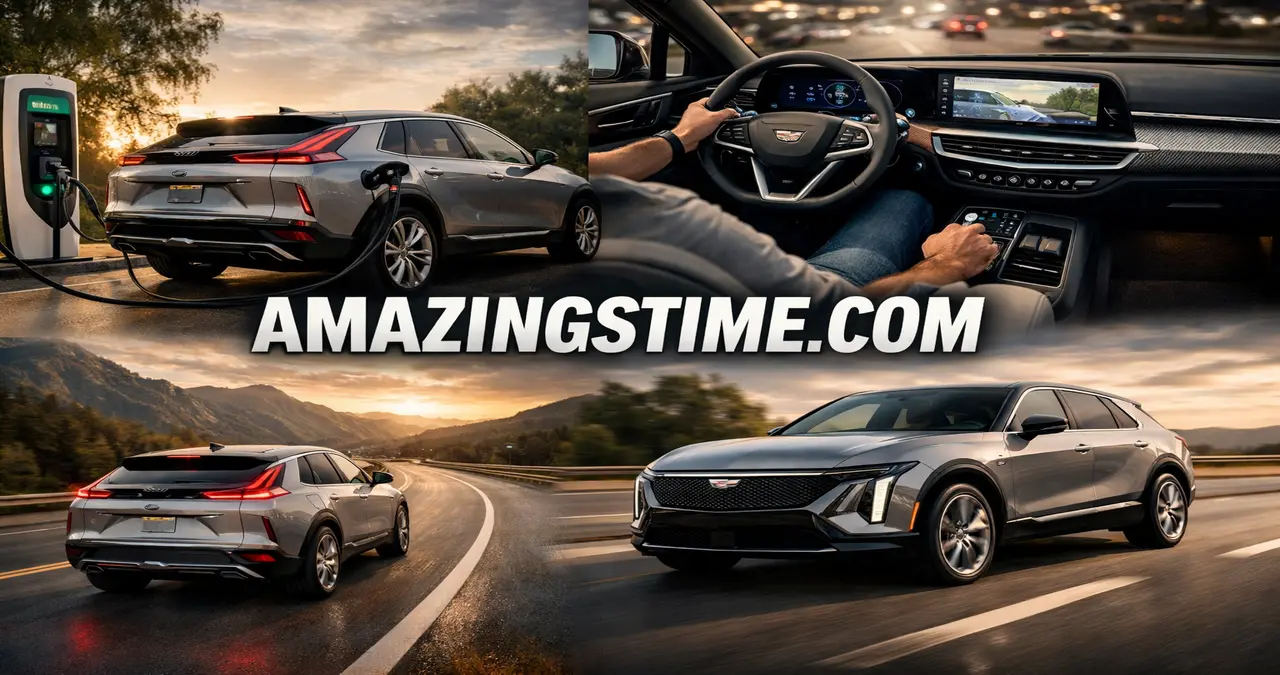
The question “do the driving modes in Cadillac Lyriq offer different ranges or battery usages?” comes up frequently among electric vehicle buyers who want clarity before making a premium investment. The Cadillac Lyriq represents Cadillac’s bold move into the fully electric luxury SUV space, and with that comes curiosity about how its advanced driving modes influence real-world range, efficiency, and battery behavior.
At first glance, driving modes might feel like simple comfort or performance presets. In reality, they play a deeper role in how energy is delivered, recovered, and preserved. While Cadillac does not label each mode with an explicit “range number,” the way power is managed behind the scenes can noticeably affect how far you travel on a single charge. This article takes a deep, expert-level look at how driving modes influence battery usage in the Lyriq, what actually changes when you switch modes, and how drivers can use them strategically for better efficiency.
Understanding Do the Driving Modes in Cadillac Lyriq Offer Different Ranges or Battery Usages
Cadillac designed the Lyriq to feel intuitive rather than technical. Instead of overwhelming drivers with complex energy graphs or engineering jargon, the driving modes subtly adjust how the vehicle behaves. These changes affect throttle response, steering feel, regenerative braking intensity, suspension tuning, and climate system behavior.
From an efficiency standpoint, the most important factor is how aggressively the vehicle draws power from the battery. Smooth power delivery consumes less energy over time, while sharp acceleration spikes draw more current and reduce total range. Driving modes influence this balance without forcing drivers to think about kilowatts or battery chemistry.
What’s important to understand is that the Lyriq does not magically increase or decrease battery capacity depending on the mode. The battery size remains constant. What changes is how quickly energy is used and how effectively energy is recovered, which indirectly affects total range.
How electric vehicles translate driving modes into battery usage
Before focusing specifically on the Lyriq, it helps to understand how driving modes generally work in modern electric vehicles. Unlike gasoline cars, EVs don’t waste energy through idling or inefficient gear shifts. Instead, they rely on software to manage energy flow with extreme precision.
Driving modes typically adjust the following elements:
- Power output curve from the electric motor
- Sensitivity of the accelerator pedal
- Regenerative braking strength
- Climate control aggressiveness
- Suspension stiffness and steering feedback
Each of these elements influences battery usage in subtle but cumulative ways. A softer throttle and stronger regenerative braking usually favor efficiency. A sharper throttle and looser regen favor responsiveness and driving enjoyment but use more energy.
In the Lyriq, Cadillac balances luxury and efficiency, meaning no mode is aggressively inefficient. However, some modes naturally lean toward preserving range more than others.
Touring mode and its relationship with efficiency
Touring mode is often considered the default driving mode for the Lyriq. It is designed for relaxed, comfortable driving that suits daily commuting, long highway stretches, and urban cruising. Do the Driving Modes in Cadillac Lyriq Offer Different Ranges or Battery Usages When drivers ask whether driving modes affect range, Touring mode is usually the benchmark.
In Touring mode, throttle response is smooth and progressive. This encourages gradual acceleration rather than sudden bursts of power. The vehicle still feels responsive, but it avoids drawing excessive current from the battery unnecessarily. Over time, this smoother delivery can help extend usable range.
Another efficiency-friendly characteristic of Touring mode is its balanced regenerative braking. When you lift off the accelerator, the vehicle gently recovers energy and feeds it back into the battery. This is particularly beneficial in stop-and-go traffic, where frequent deceleration would otherwise waste energy as heat.
Sport mode and increased battery demand
Sport mode exists for drivers who want sharper response and a more dynamic feel. In this mode, the Lyriq delivers power more aggressively, making acceleration feel quicker and more immediate. While this enhances driving enjoyment, it also increases battery usage.
The increased energy consumption in Sport mode does not come from reduced efficiency of the motor itself. Instead, it comes from driver behavior encouraged by the mode. Do the Driving Modes in Cadillac Lyriq Offer Different Ranges or Battery Usages Faster acceleration draws more power at once, which reduces overall efficiency, especially in city driving.
Regenerative braking in Sport mode may feel lighter or less intrusive, allowing the vehicle to coast more freely. While this improves smoothness and control at higher speeds, it also means less energy is recovered during deceleration, further affecting range.
Snow and slippery surface mode and energy consistency
In conditions where traction is limited, the Lyriq offers a mode designed to prioritize stability and control. This mode adjusts power delivery to reduce wheel slip and maintain grip, especially on wet or icy roads.
From a battery usage perspective, this mode tends to be neutral or slightly more efficient than Sport mode. Because power is delivered more cautiously, sudden energy spikes are reduced. However, slippery conditions often require additional traction control interventions, which can slightly increase energy use in real-world scenarios.
What’s important to note is that this mode focuses on safety rather than range optimization. Any changes in battery usage are secondary effects rather than intentional efficiency tuning.
Customizable driving preferences and their efficiency impact
One of the Lyriq’s strengths is its ability to allow drivers to customize certain driving characteristics. This means you can blend comfort-focused settings with sharper steering or braking preferences.
From an efficiency standpoint, customization allows drivers to fine-tune how much energy is used without committing fully to a predefined mode. For example, you might prefer a softer throttle for efficiency while maintaining firmer steering for confidence.
This flexibility highlights an important truth: driving style matters as much as driving mode. A gentle driver in Sport mode may achieve better range than an aggressive driver in Touring mode. The mode simply sets the stage.
Regenerative braking as the hidden factor in range variation
When discussing whether driving modes in the Cadillac Lyriq offer different ranges or battery usages, regenerative braking deserves special attention. Do the Driving Modes in Cadillac Lyriq Offer Different Ranges or Battery Usages Regen is one of the most powerful tools EVs use to extend range, and its behavior can change subtly across modes.
Stronger regenerative braking allows more kinetic energy to be converted back into stored electrical energy. In daily driving, especially in traffic, this can significantly reduce battery drain. Modes that emphasize smoother deceleration typically capture more energy over time.
Drivers who learn to anticipate stops and use regen effectively can often exceed estimated range figures, regardless of driving mode. This skill becomes more impactful than the mode selection itself.
Climate control behavior and indirect energy usage
Another often-overlooked aspect of driving modes is climate control behavior. While the Lyriq does not drastically change cabin temperature targets between modes, certain modes may prioritize comfort more aggressively.
Heating and cooling draw energy directly from the battery. In extreme temperatures, climate usage can have a noticeable impact on range. Do the Driving Modes in Cadillac Lyriq Offer Different Ranges or Battery Usages Touring or efficiency-oriented settings may moderate climate output slightly, while performance-focused driving may encourage higher energy usage overall.
This does not mean comfort is sacrificed, but the system may work more intelligently rather than aggressively, which helps preserve battery charge during long drives.
Real-world driving scenarios and range perception
Many drivers report different range experiences depending on how and where they drive rather than which mode they select. Highway cruising at steady speeds tends to favor efficiency regardless of mode, while city driving magnifies differences.
For example, Sport mode in city traffic can noticeably reduce range due to frequent acceleration. On the highway, the difference between modes may be minimal because acceleration events are less frequent and power demand stabilizes.
This leads to an important takeaway: driving modes influence range most when driving conditions are variable, not when cruising steadily.
Comparative overview of driving modes and battery behavior
| Driving Focus | Throttle Feel | Regenerative Braking | Battery Usage Trend | Best Use Case |
|---|---|---|---|---|
| Comfort-oriented | Smooth and gradual | Moderate to strong | Lower over time | Daily commuting |
| Performance-oriented | Sharp and immediate | Lighter | Higher | Dynamic driving |
| Traction-focused | Controlled and cautious | Balanced | Neutral | Slippery conditions |
| Custom blend | Driver-defined | Driver-defined | Variable | Personalized driving |
This table illustrates that while battery usage does change, it is not extreme or dramatic. The Lyriq is engineered to remain efficient across all modes.
Expert insight on maximizing range regardless of mode
“In modern EVs like the Lyriq, the biggest range gains come from consistency, not restriction. Smooth inputs and smart regen use matter more than the label on the driving mode.”
This perspective reflects how Cadillac designed the Lyriq. The vehicle trusts the driver while offering tools to adapt behavior subtly rather than forcefully limiting performance.
Does driving mode change official range ratings?
Official range ratings are tested under standardized conditions that typically use neutral or default driving settings. Cadillac does not publish separate range figures for each driving mode because the differences depend heavily on driver input.
This is why you won’t find a specific range number tied to Sport or Touring mode. Instead, Cadillac focuses on providing a consistent baseline and letting drivers influence efficiency through behavior.
Long-term battery health and driving modes
Another concern tied to battery usage is long-term battery health. Aggressive acceleration and frequent high-power draws can increase battery stress over time. While modern battery management systems are highly protective, smoother driving generally promotes longevity.
Touring-style driving and gentle regen use tend to create less thermal stress within the battery pack. This does not mean Sport mode is harmful, but moderation is beneficial for drivers focused on long-term ownership.
Common misconceptions about driving modes and range
Many drivers assume that selecting a specific mode automatically unlocks extra miles of range. In reality, the mode simply adjusts how the vehicle responds. The driver remains the most important variable.
Another misconception is that Sport mode always dramatically reduces range. In controlled driving, the difference can be surprisingly small. The Lyriq’s efficiency remains strong thanks to advanced power management software.
Frequently asked questions
Do driving modes in the Cadillac Lyriq actually change battery capacity?
No, the battery capacity remains the same. Driving modes only change how energy is used and recovered, not how much energy the battery holds.
Which driving mode gives the best range in daily driving?
Comfort-oriented modes like Touring typically support better range because they encourage smoother acceleration and stronger regenerative braking.
Can Sport mode reduce range significantly?
Sport mode can reduce range if driven aggressively. However, with gentle driving, the difference may be minimal.
Does regenerative braking differ between modes?
Yes, regenerative braking behavior can vary slightly, influencing how much energy is recovered during deceleration.
Is there a dedicated eco mode in the Lyriq?
The Lyriq does not label a mode strictly as eco, but Touring and customized settings effectively serve that purpose.
Can I customize a mode for maximum efficiency?
Yes, custom settings allow you to balance throttle response and regen behavior to suit efficiency-focused driving.
Conclusion
Final thoughts on driving modes and battery usage
The answer to do the driving modes in Cadillac Lyriq offer different ranges or battery usages? is yes, but in a nuanced and intelligent way. The driving modes do not change the battery itself; they change how energy flows between the battery, motor, and wheels. Over time, these changes influence how far you can travel on a charge.
The Cadillac Lyriq stands out because it avoids extreme efficiency sacrifices in the name of performance. Every mode remains usable and refined, allowing drivers to prioritize comfort, excitement, or safety without drastically compromising range. Ultimately, the biggest factor in battery usage is not the mode you choose, but how you drive within it.
Do the driving modes in the Cadillac Lyriq offer different ranges or battery usages?